SOCIAL MEDIA

Showing posts with label Reading. Show all posts
English Language Learners need a lot of opportunities to practice their vocabulary in all four language domains. Students need to work on Listening, Speaking, Reading, and Writing. As an ESL teacher, I was always looking for new and exciting ways to practice those language skills. Reading skills can be hard for English Language Learners to acquire. There are many components - decoding, fluency, comprehension. These activities practice a mix of all three and can be used with any vocabulary list. These activities are simple to prepare, and require no fancy materials.

Scrambled Sentences

This activity is a simple one with many variations. The idea is that students will need to reassemble a sentence or passage after it has been all mixed up. Start by writing or typing out sentences that use your target vocabulary. Then cut each word apart and mix it up. For students who need more support, you can provide a sample sentence that they then match the mixed up pieces too. If you want to add movement to the activity, give students an envelope with the mixed up sentence in it, and tape a matching sample sentence to the board. Students go up to the board, read the sentence then return to their desk to put the sentence together. If you want to make that more challenging, add a few extra words to the envelope. If your students enjoy some healthy competition, split them into two groups and make it a race! You can also do this with a short passage, cutting apart sentences instead. I used an activity like this to practice opinion writing. You can read about that and grab a free activity here.

Fill-in-the-blanks

This is another activity that is very simple to set up. Simply write out sentences using your target vocabulary, and then delete the target word and place a blank. Students will need to read the sentence and decide which word best fits. You can provide a word bank if that helps your students. You can make it more challenging by changing the word grammatically. For example, write the sentence so that students need to add an ‘s’ or ‘ing’ to the word. 

Odd One Out

“One of these things is not like the other…” Admit it, you sang that. Well that is the idea behind this game. Provide students with three or four words or sentences and ask which one doesn’t belong. For example you could say, “sloth, toucan, cow, anteater”. Students would identify the cow as the odd one out, since it is a farm animal, not a rainforest animal. You could also do singular vs plural words, common vs proper nouns… the ideas are endless. If you want to bump it up a notch, do the same with sentences. Maybe writing two facts and an opinion, or two sentences in the present tense and one in past tense.

Ball Toss

You’ve probably seen or played this game yourself. It is a fun one, especially for kids who like to get up and move. Simply write some words or sentences on a ball and toss it around. Whoever catches the ball reads the word or phrase facing them. You can do this with a beach ball - simply write the words on the ball before inflating it. If you use a sharpie on a beach ball, you may even be able to erase it afterwards with a magic eraser or hand sanitizer. This may work differently on different beach balls though, so test it first! Another option is to write the words or phrases on address labels and then stick them to a playground ball. This way you can simply remove the labels, and use the ball for a different game later on. 

Kaboom!

This fun reading game is great for vocabulary or high frequency words. Write out your target words on large popsicle sticks. On a few popsicle sticks write the word Kaboom! Place all of the sticks into a cup. Students pull a stick from the cup one at a time and read the word. If they pull a stick which says Kaboom! they put back all of their sticks. You can keep going around the group until time runs out, or all of the sticks have been claimed. If you don’t have popsicle sticks, you can write the words on folded paper and put them in a bucket to pull from.

Wacky Punctuation

This activity is great for practicing reading fluency, and is best for older students who are working on understanding punctuation. Write out sentences or a passage and change the punctuation at the end of a sentence, or add in an extra comma. Students will read the sentence out loud using the tone, volume, and pauses associated with the punctuation you’ve inserted. 

Follow the Directions

This activity is one I talked about in my Listening Activities blog post, but it can also be used as a reading activity by simply giving the students the directions written out, rather than reading them out loud. First, find a coloring page that uses some of your target vocabulary. Then write out directions for how you want your students to color the page. Give your students those directions on paper so that they can read and color. 

Reading Tower

There are two pays to play Reading Tower. In the first version you write words or sentences with your target vocabulary onto blocks. Then students take turns choosing a block and reading it out loud. If they read it correctly, they can place the block on their tower. If they do not read it correctly they need to return the block. Play continues until all of the blocks are gone. You can use any type of block for this, wooden blocks or toddler building blocks work well. In the second variation, you can play Jenga. This is great for a review game when you have a lot of vocabulary to write on the blocks. Put one word on each block. When a student pulls out that block, they must read the word before placing it on the top of the tower. You can add some complexity to this by asking them to read the word and then use it in a sentence or define it. 

Word Hunt

Word hunt is exactly what it sounds like, and one of the activities I mentioned in my Vocabulary Activities Blog Post. For this activity you give students a book or passage with the target vocabulary and ask them to find the words. You can give them sticky notes to flag the words, or highlighter tape. Picture books are great for this activity.

Read

Ok, so maybe this one is obvious, but in order to sharpen their reading skills, students need to be given time to read. No fancy game, no activity, or questions, just simple, for-pleasure reading. With all that we want to accomplish in the little bit of time we have with our students it can feel like there is no time. I usually used free reading as an early finisher task. You can make free reading part of your class routine, maybe the first five minutes of the group time is dedicated to reading quietly. It can also be a reward they are working toward - a teddy bears and books day. No matter how you do it, giving students time to simply read will help them become better readers.


Are there any reading activities your students love that I missed? Did you try one of these activities? Share them with me by commenting or connecting with me by email, michelle@teachingeternity.com, or find me on instagram, @TeachingEternity.


10 Fun Activities To Help Improve Reading Skills You Can Try Today

Thursday, April 14, 2022

When I decided to update my Vocabulary Units, I knew I wanted to include some interactive read-alouds. It is so important to read high quality, engaging texts to all students - English Language Learners are no exception. I was looking for books that would interest students, provide opportunities for discussions, and included rich vocabulary. I also wanted books that weren't too long so that primary level students would attend throughout the story. While I read and loved many numbers themed books - these five were my final choices.

Is 2 a Lot? by Annie Watson, illustrated by Rebecca Evans

This book is a fascinating adventure into numbers. It starts simply enough with Joey and his mom going for a car ride. Joey innocently asks, “Is two a lot? Suddenly, a mundane road trip turns into a wild ride complete with cowboys, dinosaurs, and even the Queen of England. The illustrations are bright and colorful. Some illustrations tell their own little story – like the Princess and the Knight with 3 broken bones. Is 2 a Lot? will really challenge students to think about what exactly ‘a lot’ means.


Discussion Questions

before reading This book is called Is 2 a Lot? So, what do you think? Is 2 of something a lot?
p. 3-4 Why do you think 2 pennies are not a lot of pennies? How much money is 2 pennies? What can you buy with that? Why are 2 skunks a lot? What do skunks do?
p. 9-10 How many children are on your school bus? What do you think would be different about your ride to school if there were only 4 children on the bus? Why do you think it would be hard to walk 4 dogs at once?
p. 19-20 Can you count to 100? Do you think that is a big number? Would you be able to make a snowman with 100 snowflakes? How many snowflakes do you think you would need?
p. 25-26 Why is 1,000 not a lot of grains of sand, but it is a lot of hot air balloons? Can you think of a situation where 1,000 grains of sand would be a lot?
after reading At the end Mommy decided to ask what he thinks. What conclusion did Joey come to? Is 2 a lot? What about you – have you changed your mind?

Post-Reading Activity

After reading, students can choose a number and write something that is a lot and not a lot of that number.

1-2-3 Peas by Keith Baker

The Pea series by Keith Baker is a delightful addition to any library. They make fun and engaging read-alouds. 1-2-3 Peas is no different. The text has a subtle rhyme and rhythm. You go through the numbers 1-10 individually with the peas rowing a boat, or dancing, or building. Then they begin counting by 10s. Each number is represented by text and numeral. Each page is brilliantly illustrated with fun details for each pea. Students will want extra time with this book just to look at the pictures. 


Discussion Questions

number 4 The peas are planting some seeds. What do you see that they will need to help the seeds grow? What kind of plants do you think peas would grow?
number 9 The nine peas are dancing. Do you know what this style of dance is called? Do you know any other styles of dancing?
number 30 All the peas are honking their horns. When you are driving in a car – when do you honk the horn? Do you think the horns on the bicycles would sound different from the horns on the big trucks? How?
number 50 The peas are working together to finish the puzzle. What is something you need teamwork to complete?
number 80 The peas are all having fun at a show. What are they laughing about?
number 100 Each pea is holding a number. Can you find the number ___? (invite students up to find a number of your choosing)

Post-Reading Activity

After reading, students can choose a number and create a poster for that number.

Click, Clack, Splish, Splash by Doreen Cronin and Betsy Lewin

This is a simple counting book with a fun surprise! Students will recognize the characters from other favorites like Duck for President and Click, Clack, Moo: Cows That Type. Farmer Brown decides to take a nap one day, and Duck and his farm friends make their move. We don’t know what they’re up to until the very end of the story. The simple counting to ten and then back down is perfect for little learners. 


Discussion Questions

before reading This book is called Click, Clack, Splish, Splash. There are other books with these characters. Do you know any of them? What happened in those books?
number 1&2 Why do you think Duck is walking on his tip-toes? Why is he making the “shh” motion? What do you think Duck is up to?
number 6 The goats are loading things in a boat. What do you see in the boat. Where do you think they are going? What do you think they will do when they get there?
number 7 The 7 pigs are carrying buckets – How many buckets are they carrying? What do you think is in the buckets? Why do you think the sheep decided to stay home?
number 10 There are 10 buckets with 10 fish! Where did the fish come from? Where do you think they are going?
after reading How does Farmer Brown feel when he realizes what happened? How do you think the fish are feeling in their new home? 

Post-Reading Activity

After reading, students can describe the different roles of each character.

One Is a Snail, Ten is a Crab by April Pulley Sayre and Jeff Sayre, illustrated by Randy Cecil

Join a snail on the beach and count some feet! This fun book counts from one to ten then by tens until one hundred. Students may notice that in order to have an odd number of feet the snail must join in. The illustrations are simple, but so much fun to look at – especially the facial expressions of the snail. This would be a fun book to talk about even and odd numbers as well as skip counting. 


Discussion Questions

before reading How many feet do you have? Can you think of something that has 4 feet? 6? 8? 10? What about 1 foot?
number 1 Snail is going to the beach! What kinds of things do you like to do at the beach? Do you think snail will like doing those things? Why or why not?
number 3 The authors of this book needed to add a person and a snail to make 3. Can you think of any creatures with 3 feet?
number 7&8 The spider has 8 legs. Is a spider an insect? How many legs does an insect have?
number 9 How is snail feeling? How can you tell? Why do you think snail is feeling that way?
number 100 The books says that 100 is 10 crabs. Let’s count by 100 by 10s. Was that faster or slower than counting to 100 by 1s?

Post-Reading Activity

After reading, students can add stickers to a beach scene then write about the number of feet.

On the Launch Pad by Michael Dahl, illustrated by Derrick Alderman and Denise Shea

Rockets and astronauts are always fascinating to young kids. This book is no exception. Starting with 12 the book counts down to a rocket’s take off. It is a simple concept with some surprisingly sophisticated ideas. The book talks about the engineers, the radar dishes, and fuel trucks. On each page there is a hidden numeral. Kids will love finding it! On the last page the publisher has provided some fun facts about space exploration, and a list of other books in the series.


Discussion Questions

number 11 What are some of the tasks that the workers are completing? Why do you think those jobs are important?
number 10 An engineer is someone who works with machines – in this case the rocket. They want to make sure the rocket works correctly. Would you like to be an engineer?
number 8 Why does the rocket need fuel? What else do you know that runs on fuel? Which needs more fuel – the rocket or a car on the road?
number 7 A radar dish allows us to communicate with something in space. Right now, these radar dishes are silent because the rocket is not in space. If you went to space – what message would you want to send back?
number 6 How do you think these astronauts are feeling? How would you feel if you were going to space in a rocket
number 1 The rocket has lifted off the ground and is headed for the stars. What else is out in space for the astronauts to explore?

Post-Reading Activity

Students color their rocket according to the glyph and compare it with a classmate.

If you are looking for these discussion questions and activities ready-to-print and use please check them out in either my Numbers Vocabulary Unit or my Numbers Read-Alouds resource in my Teachers Pay Teachers store. 


Find a free download of shapes themed books by signing up below.

If you chose to read any of these books with your students I'd love to hear about it! You can e-mail me at TeachingEternity@gmail.com, or connect with me on Instagram, @TeachingEternity.

5 Numbers Read Alouds

Monday, December 13, 2021

When I decided to update my Vocabulary Units, I knew I wanted to include some interactive read-alouds. It is so important to read high quality, engaging texts to all students - English Language Learners are no exception. I was looking for books that would interest students, provide opportunities for discussions, and included rich vocabulary. I also wanted books that weren't too long so that primary level students would attend throughout the story. While I read and loved many shape themed books - these five were my final choices.


Snippets: A Story About Paper Shapes by Diane Alber

This adorable book is simple yet profound. The shapes in paper place are all perfect polygons – squares and triangles. They build perfect houses. One day a Snippet comes along and challenges them to think outside the box. Snippets by Diane Alber is full of rich vocabulary like distinctive, gleaming, and unique. The illustrations are simple, but very interesting. This is a book which should be read more than once, to truly understand the lessons it’s teaching us.

Discussion Questions

p. 1-2 Look at the triangles and the squares – what do you notice? Do they look happy? The author uses the word ‘mundane’ – it means not very interesting, boring
p. 5-6 The blue Snippet wants to help Square and Triangle make houses, but Square sends him away. Why doesn’t Square want to work with Snippet? The word ‘asymmetrical’ means shapes who aren’t the same on all sides.
p. 9-10 Snippet was feeling sad after being sent away by Square. How does he feel now? How do you know? What changed?
p. 13-14 Snippet decides to try again. What does he want for all of the shapes? The word ‘unique’ means special, or unlike anything else.
p. 19-20 Snippet jumps on a triangle roof to be a chimney. How does Square react? What do you think might happen next?
p. 25-26 Look at the town they were able to make! What do you notice? How is Square feeling now?

Post-Reading Activity

After reading, students can draw and house using many shapes, then write about their drawing.

Mouse Shapes by Ellen Stoll Walsh

This simple text is perfect for young children learning their shapes. Three mice hide from a cat in a pile of shapes. Once the cat has gone away, they use the shapes to make everyday objects like a wagon and a book. They have to abandon their fun briefly when the cat reappears, but then they come up with a plan to scare him away for good! Mouse Shapes is a perfect concept book for little learners.

Discussion Questions

p. 1 Why are the mice running away from the cat? What do you know about cats and mice?
p. 4-5 Where are the mice hiding? What shapes do you see? What colors do you see?
p. 10-11 Violet says, “…any shape with three sides is a triangle.” Did you know that? Looking at the triangles – what makes them different?
p. 16-17 Why does Martin think their shape cat is better than the real cat?
p. 22-23 Look at the mouse in the middle – he is making a leg. What shape was the orange piece? Could he have used different pieces for the legs?
p. 26-27 Their plan worked! How do you think the little mice are feeling now?

Post-Reading Activity

After reading, students will identify the story elements. There is a whole-group or individual option.

Walter’s Wonderful Web by Tim Hopgood

Walter is a little spider trying to make himself a nice sturdy web. No matter what he does though the web always blows away in the wind. He tries making a triangle web, and a square web. He even tried a circle web, but nothing worked. Walter finally figures out how to make a strong and sturdy web. Walter's Wonderful Web is an adorable book about perseverance as well as shapes. The illustrations are clear, colorful and fun. This is a perfect book for children learning their shapes.

Discussion Questions

p. 1 Walter wants to build a web. Why do spiders build webs? What do they use the webs for?
p. 10 Walter is going to make a longer web this time. What shape do you get if you make a square longer?
p. 17-18 Do you think a round web is a good idea? What shape would a round web be? What shape are spider webs usually?
p. 21-22 How is Walter feeling? How do you know he is feeling that way? What do you think Walter should do now?
p. 23-24 Look around Walter’s web – where is he building his web? Do you think in a tree is a good place for a web? Why or why not? Where have you seen spider webs?
p. 25-26 Walter finally finished his wonderful web! What do you notice about Walter’s wonderful web? What shapes do you see?

Post-Reading Activity

After reading, students will identify Walter’s character traits. There is an individual option and pieces for an anchor chart included.

City Shapes by Diana Murray, illustrated by Bryan Collier

City Shapes by Diana Murray is a lyrical text that explores the city from a bird’s view. Each set of pages introduces typical scenes from a city and the shapes present in them. From square packages to round tires, and a circle nest – each shape is represented many times. The illustrations are beautiful collages which make use of every bit of the page. This book is perfect for every student, whether they live in the city or country.

Discussion Questions

before reading This book is all about the shapes you can see in the city. What things can you see in a city?  What shapes are those?
p. 2-3 This page talks about a mail truck, a pretzel cart, and packages. What shapes are those things?
p. 14-15 These pages were about round circles. What else do you see in the pictures that is a circle?
p. 22-23 Here we see a park with the city in the background. Many people in the park are flying kites. Have you ever flown a kite? What helps a kite fly?
p. 28-29 The pigeon is home in her nest. In the background you can see the city skyline. What shapes do you notice?
after reading Think about your neighborhood – what do you see in your neighborhood and what shape is it?

Post-Reading Activity

After reading, students will identify things they can see in the city. There is a whole-group or individual option.

Ship Shapes by Stella Blackstone, illustrated by Siobhan Bell

Two friends (and a loyal pup) set sail on a shape-filled adventure on the high seas. They encounter all different kinds of boats, even a pirate ship! The book is written in questions to answer. Readers are invited to identify and count shapes. The illustrations tell the story of submarines and treasure chests. The images are created with fabric and sewing notions. The uniqueness of the images will delight everyone.

Discussion Questions

This book is written as questions to the reader. Stop after each page to allow students to answer those questions.

Post-Reading Activity

After reading, students can draw a boat and describe its shapes.

If you are looking for these discussion questions and activities ready-to-print and use please check them out in either my Shapes Vocabulary Unit or my Shapes Read-Alouds resource in my Teachers Pay Teachers store. 


Find a free download of shapes themed books by signing up below.

If you chose to read any of these books with your students I'd love to hear about it! You can e-mail me at TeachingEternity@gmail.com, or connect with me on Instagram, @TeachingEternity.

5 Shapes Read-Alouds

Tuesday, November 30, 2021

When I decided to update my Vocabulary Units, I knew I wanted to include some interactive read-alouds. It is so important to read high quality, engaging texts to all students - English Language Learners are no exception. I was looking for books that would interest students, provide opportunities for discussions, and included rich vocabulary. I also wanted books that weren't too long so that primary level students would attend throughout the story. While I read and loved many fall themed books - these five were my final choices.


Full of Fall by April Pulley Sayre

April Pulley Sayre’s Full of Fall is a beautiful collection of photographs to portray the fall season. The simple text has a subtle rhythm and rhyme. Students will enjoy both listening to this text as a read-aloud and studying the images in detail. The photographs follow the timeline of fall from the end of summer in September to the first snowfall at the end of the book. The author includes notes at the end of the book to explain the scientific processes that leaves go through.

Discussion Questions

p. 2-3 The first day of fall is September 22nd. The text says, “Green goodbye.”  Why do you think the text says this? What colors do you think of for fall?
p. 12-13 This photo looks like it was taken while laying under the tree. Imagine laying under this tree. What would you hear? What else would you see? How would it feel?
p. 19 Why do you think these leaves are floating in the air?
p. 22-23 The leaves on the ground are dying up. How could those leaves get cleaned up? Tell us about a time you may have helped cleaned up leaves.
p. 30-31 Compare this photograph of a forest to the photograph of a forest at the beginning of the book. What differences do you notice?
p. 34-35 What season comes after fall? What signs of winter do we see in this photo? What is surprising about this picture? The author explains that this kind of tree loses it’s leaves in the spring rather than the fall.

Post-Reading Activity

After reading, have each student choose one photo as their favorite. Then ask them to describe the photo. This can be done in writing or in conversation.

We’re Going on a Leaf Hunt by Steve Metzger, illustrated by Miki Sakamoto

We’re Going on a Leaf Hunt by Steve Metzger is an adorable book about three children going on a leaf collecting adventure.  Just like in the classic book We’re Going on a Bear Hunt by Michael Rosen, the children come to obstacles they can’t go over or under. The surprise at the end that sends them home is good for a giggle. Miki Sakamoto’s illustrations are simple and perfectly compliment the text.

Discussion Questions

before reading The title of this book is We’re Going on a Leaf Hunt. Have you ever read a book with a similar title? What happened in that book. What do you think these 3 friends will see and do on their leaf hunt?
p. 2-3 The friends just climbed a mountain. The author included some sound words – did you hear them? Why do you think those are the sounds for climbing a mountain.
p. 8-9 How are the friends feeling about going through the forest? How can you tell? Have you ever walked through a dark forest? What could be scary in a dark forest?
p. 16-17 These leaves are in a big pile for jumping in. Have you ever jumped into a pile of leaves? Was it fun? Why or why not? How do you think the leaves got into a pile for jumping?
p. 20-21 The friends are putting on life jackets. Why are life jackets important when you are getting in a boat?
p. 25 The friends found a skunk behind the bush. Why are they running away from the skunk?

Post-Reading Activity

After reading, provide students with images to represent each step of the hunt - mountain, forest, waterfall, and lake. Ask students to sequence the images. Add on a writing piece by asking students to write a sentence or label each step.

Apple Countdown by Joan Holub, illustrated by Jan Smith

I remember trips to the apple farm being a favorite growing up, and this book definitely captures all of the fun! Apple Countdown by Joan Holub follows a class of 19 students and 1 teacher on a field trip counting down from 20, all the way to 1.  Along the way there is some helpful information, like the best way to pick an apple, a little bit of science – showing apple trees in all 4 seasons, and even some math! Students in your class will have just as much fun listening to the book and looking at the pictures as the characters do on their field trip.

Discussion Questions

before reading Look at the cover of the book. What do you see? What do you think this story will be about?
19 The class is on the bus headed to a field trip. Have you ever been on a field trip? Where did you go and what did you do there? Where do you think these kids are going?
17 What are some things they think they may see on their field trip. Do these help you guess where they are going?
12 & 11 Applebee farm has apples and bees! Why would bees be an important part of an apple farm? These pages also show different types of apples. What is your favorite kind of apple?
3 They made apple pies from some apples. What are your favorite ways to eat apples?
1 Throughout the book there have been clues that Lee was going to lose his tooth. Why do you think his tooth finally fell out?

Post-Reading Activity

After reading, ask students to draw or write about an apple tree in different seasons.

Fall Leaves Fall! by Zoe Hall, illustrated by Shari Halpern

Two brothers anxiously await their favorite season – FALL! Fall Leaves Fall is a simple story about many things you can do in the fall.  The brothers catch leaves and collect leaves, they rake leaves and jump into the pile. The illustrations are bright and simple in the most perfect way.

Discussion Questions

p. 1 The text says, “How do we know when fall is coming?” What are some ways we know the season is changing from summer to fall?
p. 6-7 Compare the illustrations on pages 2 and 3 to the illustrations on these pages. What has changed? What has stayed the same?
p. 19 Look at the squirrels. What are they doing? Why are they doing that?
p. 22-23 Have you ever helped rake leaves? Is it a hard job? How else can you get leaves off of the ground?
p. 30-31 The brothers are very excited about their leaf pile What do you think they will do next? Have you ever done that before?
p. 34-35 What season is coming next? What clues do you see in the illustrations?

Post-Reading Activity

After reading, brainstorm different activities for fall as well as activities you would not do in fall.

By the Light of the Harvest Moon by Harriet Ziefert, illustrated by Mark Jones

By the Light of the Harvest Moon by Harriet Ziefert is a fun book about ‘leaf people’ who have a party to celebrate the first day of autumn. The story begins with farmers finishing up the day and heading to bed. The bright moon shines down as the wind blows and the leaf people emerge. They bob for apples and have a pumpkin stacking contest before enjoying fall desserts like pumpkin pie. The illustrations by Mark Jones are beautifully detailed and reflect the glorious colors of the season. 

Discussion Questions

p. 5-6 The text says the farmer is ‘weary’.  What do you think ‘weary’ means?
p. 6-7 The leaf people are decorating a table. What does this remind you of? Has your family ever decorated a table for a big party? Who is this party for?
p. 19 The leaf children are doing lots of fall activities like bopping for apples and pumpkin stacking. What are your favorite fall activities?
p. 22-23 Surprise! They are having a dessert party! What dessert do you see on the table? Which would you like to try?
p. 30-31 What does it mean when it is the fall equinox? The first day of fall is September 22nd. 
p. 34-35 Compare the trees in this photo to the trees in the beginning of the book.  What has happened? What clue did the leaf people leave behind?

Post-Reading Activity

After reading, students can create a poem about fall. A five senses poem or an acrostic poem using the word harvest would be great!

If you are looking for these discussion questions and activities ready-to-print and use please check them out in either my Fall Vocabulary Unit or my Fall Read-Alouds resource in my Teachers Pay Teachers store. If you chose to read any of these books with your students I'd love to hear about it! You can e-mail me at TeachingEternity@gmail.com, or connect with me on Instagram, @TeachingEternity.


Find a free download of fall themed books by signing up below!


5 Fall Read-Alouds

Friday, September 10, 2021

When I decided to update my Vocabulary Units, I knew I wanted to include some interactive read-alouds. It is so important to read high quality, engaging texts to all students - English Language Learners are no exception. I was looking for books that would interest students, provide opportunities for discussions, and included rich vocabulary. I also wanted books that weren't too long so that primary level students would attend throughout the story. While I read and loved many teacher themed books - these five were my final choices.


Same Way Ben by Maryann Cocca-Leffler

Same Way Ben by Maryann Cocca-Leffler is a great book for students about to experience their first substitute teacher. Ben did the same thing every day, he put on the same clothes, went to school, sat at the same table, ate the same lunch, and everything was perfect! However, Ben’s world gets thrown for a loop when suddenly there is a substitute teacher, and nothing is the same at all. With the help of friends and a special teacher, Ben learns to embrace the change. 

Discussion Questions

p. 5 Ben likes things the same every day. Is there anything that you like to keep the same every day? Are there things that you like to change?
p. 8-9 How is Ben feeling? Why do you think he is feeling this way? Have you ever felt sad or nervous about something changing?
p. 16-17 Even more things are changing in Ben’s class. What do you think Ben should do about all the changes? Is there someone he could talk to?
p. 22 Mrs. Garcia says, “Changes make life exciting… like an adventure!” Do you agree with Mrs. Garcia? Why or Why not?
p. 26-27 Ben is trying something new! Looking closely at the picture - What is Ben doing that is different that his usual routine?
after reading What did Ben learn about change? Have you ever had to make a change you were scared about, but it was a good change in the end?

Post-Reading Activity

After reading, complete a story map to identify the setting, characters, beginning, middle, and end. This book would also be a great way to start the conversation around the expectations when there is a substitute teacher.

First Day Jitters by Julie Danneberg, illustrated by Judy Love

This book is a classic beginning of school story – and for good reason. It gives students a glimpse into a teacher’s thoughts and feelings on the first day of school. Up until the very end readers believe that Sarah Jane Hartwell is a student nervous about her first day of school. Every kid can empathize with her reluctance to start at a new school. Reading this book and sharing your feelings about the first day with your own students will help to create a caring and empathetic classroom.

Discussion Questions

before reading This book is called First Day Jitters. Do you know what the ‘jitters’ are? It means you feel nervous. Do you feel nervous on the first day of school?
p. 4 Sarah says, “I hate my new school.” Why do you think she says that? Has she ever been to the school? Have you ever said you didn’t like something before you tried it?
p. 6-7 Look at these two groups of students. Which group would you like to go to school with? Why?
p. 15 Sarah says, “My head hurts.” Why does she say that? Have you ever gotten a headache or stomachache thinking about doing something you didn’t want to do? Do you think she should stay home today?
p. 24-25 Look at the classroom – how is it like your classroom? How is it different?
after reading Sarah is the teacher! Did you know that teachers can feel nervous on their first day of school too?

Post-Reading Activity

After reading, compare the ways you, as a teacher, feel on the first day of school with the ways students feel on the first day of school. Be honest with your students about your feelings. This can help with building relationships in the classroom.

School’s First Day of School by Adam Rex, illustrated by Christian Robinson

This lovely book is told from the point of view of a new school building. When Janitor tells School that soon teachers and children will be coming School becomes nervous. When the first day finally arrives, School is disheartened to learn that not everyone likes him. However, as the day goes on things get better for everyone. After all the students go home, Janitor returns, and School tells him all about the day. School decides that being a school is lucky after all!

Discussion Questions

p. 1 Look at the school they have built! Can you see School’s face? Watch for that face carefully because it will change in the story to tell us how he is feeling. Does this school look like your school? How is it the same? How is it different?
p. 6-7 Look at this big room – what do you see? What different things can this room be used for?
p. 8-9 Look at School’s face now. How is he feeling? Why do you think he is feeling that way? How did the children get to school?
p. 17 Why do you think the little girl says that she does not like school? How is she feeling? Have you ever felt that way about school?
p. 26 Look at school now, at the end of the day? How is he feeling? Why do you think he is feeling better? What happened that made him happy?
after reading What makes a school special, and different from a house? Do you think school will be nervous to have the children back tomorrow?

Post-Reading Activity

After reading, create a character map for School. Use what he says and thinks to fill in the map.

How to Get Your Teacher Ready by Jean Reagan, illustrated by Lee Wildish

This adorable book takes students through various important dates in the school year. For each special day there are jobs students can do to help their teacher get ready. There are even plans for when the day doesn’t go as planned. How to Get Your Teacher Ready by Jean Reagan is a perfect read-aloud for the beginning of the school year. 

Discussion Questions

p. 2-3 This page is “How to Welcome your Teacher” What are some ways you can make your teacher, or another classmate feel welcome in our class?
p. 8-9 Have you ever performed in a concert? How is the teacher feeling? How do you know? What helps them to feel better?
p. 12-13 This day did not go as planned! What went wrong? What did they do to fix it? What other ways can you try to fix a bad day at school?
p. 14-15 These students are teaching their teacher about their favorite topics? What is your favorite thing to learn about? Who do you like to talk about that topic with?
p. 16-17 They are getting ready for field day? What do you know about field day? What kind of games do you play on field day?
after reading This book talked a lot about special events at school. What special events at school are your favorites? How do you and your teachers get ready for them?

Post-Reading Activity

After reading, brainstorm ways that students can help their teachers.

Clothesline Clues to the First Day of School By Kathryn Heling and Deborah Hembrook, illustrated by Robert Davies

If you’ve read any of the Clothesline Clues books – then you’ll know this is a good one. Every other page gives clues to someone who works at school, followed by a page of them doing their job. Students will love guessing who is who based on the clues. 

Discussion Questions

Allow students to guess the school staff member after each page.

Post-Reading Activity

After reading, students can create clues to school personnel. They can then present the clues to the group.  


If you are looking for these discussion questions and activities ready-to-print and use please check them out in either my People at School Vocabulary Unit or my People at School Read-Alouds resource in my Teachers Pay Teachers store. If you chose to read any of these books with your students I'd love to hear about it! You can e-mail me at TeachingEternity@gmail.com, or connect with me on Instagram, @TeachingEternity.


Click the image above for a list of more picture books about people at school.


People at School Read-Alouds

Wednesday, August 18, 2021


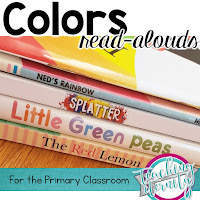
When I decided to update my Vocabulary Units, I knew I wanted to include some interactive read-alouds. It is so important to read high quality, engaging texts to all students - English Language Learners are no exception. I was looking for books that would interest students, provide opportunities for discussions, and included rich vocabulary. I also wanted books that weren't too long so that primary level students would attend throughout the story. While I read and loved many colors themed books - these five were my final choices.


The Red Lemon by Bob Staake

In this cute rhyming text, farmer McPhee is very proud of his orchard of perfect, yellow lemons. The book touches on the process of going from farm to store and mentions many things that can be made from lemons. One day Farmer McPhee spies a red lemon in his trees and believing no one would want a red lemon he throws it away. However, after time has passed that red lemon sprouted a new orchard, and everyone likes red lemons just fine. The illustrations are bright and fun to look at. The Red Lemon by Bob Staake is a great book for young kids.

Discussion Questions:

Before Reading This book is called The Red Lemon. Does that title surprise you? What do you know about lemons?
p. 3-4 How do lemons grow? How do the lemons get from the tree to the store?
p. 7-8 Have you ever had a food with lemon? What lemon food have you had? What did it taste like?
p. 11-12 Farmer McPhee sees a red lemon on his tree. How does he feel about that red lemon? What would you think if you saw a red lemon?
p. 17-18 Farmer McPhee threw the red lemon onto the empty island. Make a prediction – what do you think will happen to the red lemon on the island. 
After Reading  Turns out red lemons are really yummy! What can we learn from this book?

Post-Reading Activity:

After Reading, have students discuss their favorite fruit and the colors that they are. Extend the activity by including vegetables or other foods. Glyph activity pictured is from my Colors Read-Aloud Resource

Little Green Peas by Keith Baker

This is such a fun colors book! The simple text combined with the detailed illustrations create book that will appeal to everyone. Each page has a color word and various items that are that color. That is followed by a page of Little Green Peas enjoying their colorful world. This is a book students will want to sit and look at. Each little pea in the illustration has something fun to notice. On one page a pea is painting while wearing a beret. On another a group of peas are dancing in the rain. There is a little red ladybug hiding on each page that students will enjoying looking for. Little Green Peas by Keith Baker is the perfect book for primary level students exploring colors.


Discussion Questions:

p. 3-4 What season are the Peas enjoying? How do you know?
p. 5-6 Looking at the trees on this page – what season is it? How do you know?
p. 11-12 The Little Green Peas are having fun playing games outside. What other games could they be playing at the park?
p. 17-18 It looks like the Peas are growing a garden. What does a garden need to grow? What do you think the Little Green Peas are growing?
p. 21-22 What season do you see on this page? What winter activities are the Little Green Peas doing? What other winter activities can you think of? 
p. 31-32  How is the last page different from the rest of the book? Why do you think the author wrote “Little Green Guys” instead of “Little Green Peas”?

Post-Reading Activity:

After Reading, have students chose one of the colors from the book and create a poster for that color. Students can use stickers, magazine cut-outs or their own drawings to create their poster.

Splatter by Diane Alber

Splatter by Diane Alber is a book about teamwork and perseverance cleverly hidden in a story about colors. Red, Yellow, and Blue always do their own thing. They keep to themselves and seem to be happy. One day Red challenges them to come together to create a new piece of art. There are a few hiccups along the way, but soon they learn to work together. This book is fun to read with its rhyming text and quirky images. It is perfect for a colors unit in the primary classroom.


Discussion Questions:

Before Reading What colors do you see? Red, Yellow, and Blue – these are called primary colors. What other colors do you know? Why do you think they aren’t on the cover?
p. 3-4 Each color is using its own piece of paper. Have you ever tried to make a drawing with only one color? What did you draw? How did it turn out?
p. 9-10 Blue started painting and forgot to leave room for Red and Yellow. How do you think they are feeling? Have you ever waited for a turn in a game? How did it feel?
p. 19-20 Yellow and Blue are scared to try something new. Red shows them how. Why do you think flowers are a good thing for them all to paint together?
p. 23-24 Here are some other colors! What did Yellow and Blue make? Red and Yellow? Blue and Red?
(Green, Orange, Purple) These are called secondary colors. 
After Reading  They worked together to create a beautiful painting! How do you think they are feeling now? What do you think of their art?

Post-Reading Activity:

After Reading, invite students to name things that are red, yellow, and blue. Keep track with a group anchor chart or in individual notebooks. Extend the activity by asking for things that can be all 3 colors.

Ned's Rainbow by Melanie Walsh

Ned LOVES rainbows! He has rainbow clothes and paints rainbow pictures. However, he’s never seen a rainbow in real life! Until one day in the park after a storm, a rainbow finally appears in the sky. Ned tries his hardest, but can’t catch the rainbow, and becomes very sad. Luckily, someone who cares for him, has an idea to cheer him up. This sweet story is perfect for young kids. The simple text and illustrations make it one that they will want to read again and again.

Discussion Questions:

p. 1-2 If Ned has never seen a real rainbow – how does he know he likes them so much?
p. 3-4 What was Ned doing in the park before the rainbow appeared? Why is that important? How is a rainbow formed in the sky?
p. 7-8 Why does Ned want to catch the rainbow? Why do you think it is hard for him to catch the rainbow?
p. 9-10 Ned is very sad that he couldn’t catch the rainbow. Have you ever felt sad before? What did you do to feel better? Did anyone try to help you like Ned’s dog is trying to help?
p. 13-14 What do you think Mom did while Ned was at school? What do you see in the picture that makes you think that? How do you think Ned will feel when he sees what Mom did? 
p. 19-20  Ned still looks for rainbows even though he has one on his wall. Why are rainbows in the sky special?

Post-Reading Activity:

After Reading, students can identify the story elements from Ned's Rainbow. Do this with a whole group or have students do it individually depending on their level.

Penguins Love Colors by Sarah Aspinall

A family of color-loving penguins provides for a fun story. Six penguin brothers and sisters are each named after a colorful flower because their Mama loves color too. One day the six penguins decide to paint Mama a picture on the white snow. In the process of creating their art the penguins become covered in paint. Kids will wait with bated breath to see if mama gets mad. The illustrations are bright, clear, and engaging. This is the perfect book to add to a colors unit.


Discussion Questions:

Before Reading This book is called Penguins Love Colors. What color is a penguin? Where do penguins live? What color is it there? Does the title of this book surprise you?
p. 2-3 The penguins are named Tulip, Tiger Lily, Dandelion, Violet, Bluebell, and Broccoli. Which of these names surprises you? Did you know the part of broccoli we eat is the flower?
p. 4-5 The penguins are going to paint a picture for Mama Penguin. What supplies do you use to paint? The penguins are going to paint on snow instead of paper. Do you think that is a good idea?
p. 18-19 The penguins made a big mess! They are covered in paint! Do you think Mama will be mad? Do you think she will like her painting?
p. 20-21 Do you remember the names for each penguin? Do you see those flowers in the picture? (Tulip, Tiger Lily, Dandelion, Violet, Bluebell, and Broccoli) 
p. 28-29  All of the penguins are taking a bath to get clean. What do you think will happen to the bath water?

Post-Reading Activity:

After Reading, students can make a card for a loved one. They can make a colorful picture on the front and write a note on the back.


If you are looking for these discussion questions and activities ready-to-print and use please check them out in either my Colors Vocabulary Unit or my Colors Read-Alouds resource in my Teachers Pay Teachers store. If you chose to read any of these books with your students I'd love to hear about it! You can e-mail me at TeachingEternity@gmail.com, or connect with me on Instagram, @TeachingEternity.


Click the image above for a list of more picture books about colors

5 Color Read-Alouds

Tuesday, February 9, 2021

Instagram